
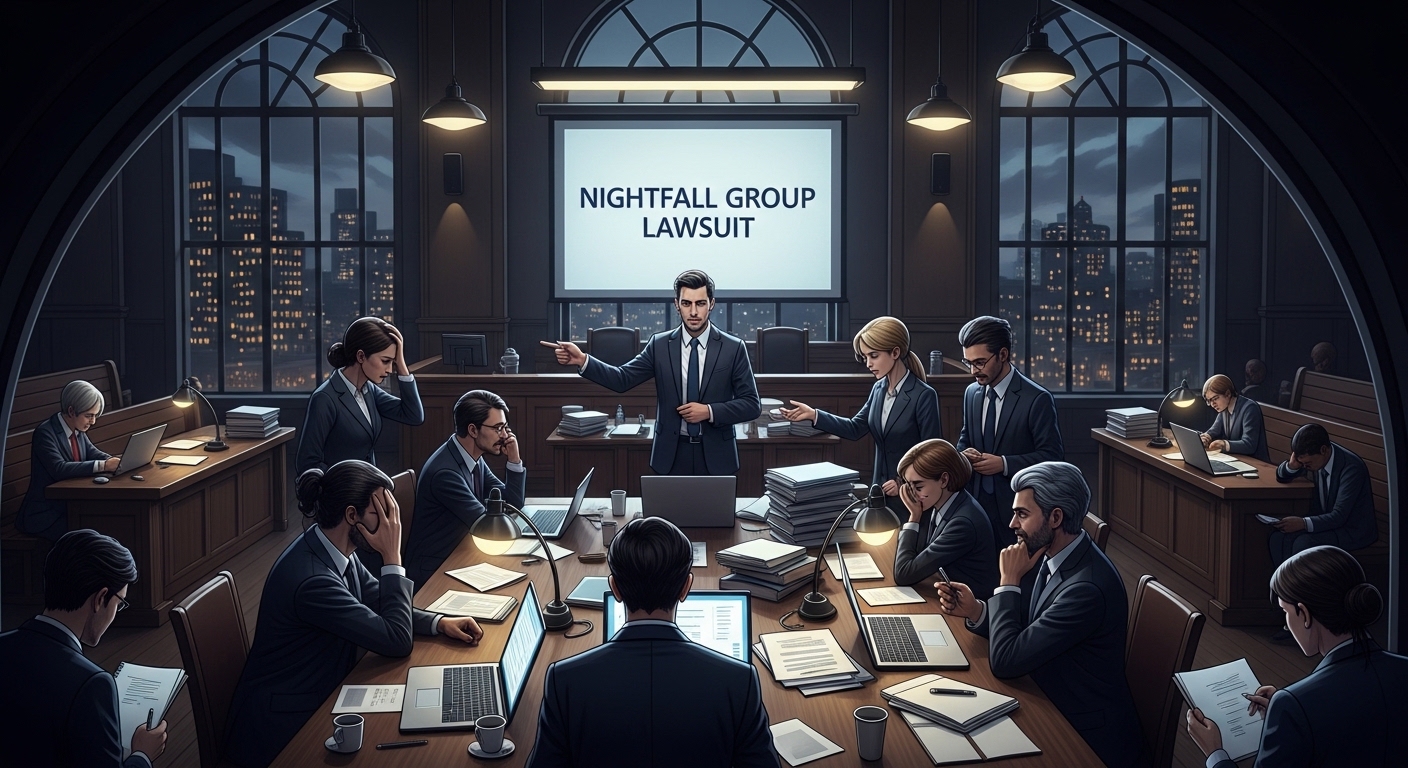
The Nightfall Group Lawsuit has drawn significant attention from regulators, property owners, and residents in Los Angeles concerned with short-term rental compliance and neighborhood impacts. Filed in August 2023 by the Los Angeles City Attorney’s Office, the civil enforcement action targets alleged violations of the city’s Short-Term Rental Ordinance (also known as the Home-Sharing Ordinance) and related public nuisance provisions.
As of April 2026, the case remains active in Los Angeles Superior Court under case number 23STCV19069. Partial settlements have been reached with certain defendants, while litigation continues against the primary corporate entity and its owner. This article provides a factual overview of the proceedings, the underlying legal framework, and the practical implications for stakeholders, drawing on publicly available court records and official statements.
Background on The Nightfall Group and Its Operations
Ultimate Host, LLC, which does business as The Nightfall Group, operated as a high-end home hosting platform. The company leased residential properties in areas such as the Hollywood Hills on a long-term basis from homeowners and then subleased them as short-term rentals, often marketed as luxury “villas” on platforms like Airbnb.
According to the complaint, these properties were frequently used for large gatherings, leading to repeated law enforcement responses. The Los Angeles Police Department reportedly received more than 250 calls related to Nightfall-associated properties over a two-year period, citing issues including excessive noise, disruptive behavior, obstruction of public rights-of-way, litter, and vandalism.
The City Attorney’s Office has described The Nightfall Group as a notable contributor to the city’s “party house” problem, where residential properties are converted into venues for short-term, high-impact events in violation of local rules designed to protect housing availability and community quality of life.
The Lawsuit: Filing, Parties, and Allegations
In August 2023, Los Angeles City Attorney Hydee Feldstein Soto filed a civil complaint in Los Angeles Superior Court against:
- Ultimate Host, LLC (dba The Nightfall Group)
- Mokhtar Jabli (identified as the owner and operator)
- Several affiliated property owners and entities, including Jungle Kerry, Inc., 5554 Green Oak, LLC, and Kirill “Kirk” Ayzenberg (individually and as Trustee of the Gabriel Mark Trust)
The core allegations center on violations of Los Angeles Municipal Code provisions governing short-term rentals. Specifically, the city’s Home-Sharing Ordinance, adopted in 2018 and effective in 2019, permits limited short-term rentals (30 consecutive days or fewer) only under strict conditions: the property must be the host’s primary residence, occupied by the host for more than six months per year, and limited to one such unit per host. Hosts must register with the city and display the registration number in all advertisements.
The complaint further alleges that The Nightfall Group and its associates operated multiple properties outside these parameters, effectively converting long-term rental housing into unregistered short-term accommodations. Additional claims invoke the city’s Party House Ordinance and broader public nuisance laws, asserting that the operations created ongoing disturbances affecting neighboring residents.
The City Attorney’s Office seeks injunctive relief to halt non-compliant operations, civil penalties, and other remedies available under the Los Angeles Municipal Code and California’s Unfair Competition Law. No criminal charges have been filed in connection with this matter.
Key Legal Framework: Los Angeles Short-Term Rental Rules
To understand the Nightfall Group Lawsuit, it is essential to review the governing regulations. The Home-Sharing Ordinance was enacted to balance limited peer-to-peer hosting with the need to preserve the city’s housing stock and minimize neighborhood impacts from commercial-scale short-term rental activity.
Under the ordinance:
- Only primary residences qualify.
- Un-hosted short-term rentals are generally capped at 120 days per calendar year unless an Extended Home-Sharing permit is obtained.
- Registration with the city is mandatory, and advertising must include the registration number.
- Violations can result in civil penalties, injunctions, and abatement orders.
These rules reflect a broader national trend in which municipalities regulate short-term rentals to address housing affordability, traffic, noise, and public safety concerns. Courts routinely uphold such ordinances when they are rationally related to legitimate governmental interests, consistent with established zoning and police power principles.
Latest Developments: 2025 Settlements and Ongoing Proceedings
On September 2, 2025, the City Attorney’s Office announced settlements with three of the named defendants: Kirill “Kirk” Ayzenberg (individually and as Trustee), 5554 Green Oak, LLC, and Jungle Kerry, Inc.
The terms include:
- Civil penalties totaling $280,000 ($215,000 against Ayzenberg, $45,000 against 5554 Green Oak, LLC, and $20,000 against Jungle Kerry, Inc.).
- Permanent prohibitions on engaging in short-term rental activity at any residential property in Los Angeles in a manner that violates the Home-Sharing Ordinance.
- Requirements that all guests at any rental properties owned or operated by these parties be notified in writing that loud or unruly parties are prohibited.
These settlements do not constitute admissions of liability. The City Attorney’s Office stated that litigation against Ultimate Host, LLC (dba The Nightfall Group) and Mokhtar Jabli remains pending.
No additional settlements or final court rulings regarding the primary defendants have been publicly reported as of April 2026. Civil enforcement actions of this nature often proceed through discovery, motion practice, and potential negotiation phases that can extend over multiple years.
Separate Related Legal Matters
In addition to the primary enforcement action, The Nightfall Group has faced other civil disputes. In January 2024, luxury staging firm Vesta Homes filed suit in Los Angeles Superior Court alleging unpaid invoices totaling approximately $116,000 for interior design services and furniture leasing related to Nightfall properties. That matter is distinct from the City Attorney’s case.
A separate enforcement action by the City of Miami Beach in 2023 addressed noise and zoning violations at a property involving The Nightfall Group, resulting in fines exceeding $300,000 against the owner and tenant. These cases illustrate the multi-jurisdictional compliance challenges faced by short-term rental operators.
Legal Analysis: What the Proceedings Illustrate
From a regulatory perspective, the Nightfall Group Lawsuit underscores the enforcement priorities of local governments in addressing perceived loopholes in short-term rental markets. By pursuing civil penalties and injunctive relief rather than criminal sanctions, the City Attorney’s Office employs a measured approach common in municipal code enforcement: deterrence through financial accountability and operational restrictions.
For property owners and operators, the case highlights the importance of verifying compliance before entering leasing arrangements. Long-term lease agreements that contemplate subleasing as short-term rentals carry material risk if the subleasing violates local ordinances. Courts generally enforce clear contractual terms, but regulatory violations can render certain arrangements unenforceable or subject to abatement.
Neighbors and community associations benefit from these actions when they reduce documented nuisances. Public records of repeated law enforcement calls provide objective evidence supporting nuisance claims under established California tort and municipal law precedents.
It is important to note that, as of the latest available information, no court has issued a final judgment finding Ultimate Host, LLC or Mokhtar Jabli liable for the allegations. Settlements with co-defendants reflect negotiated resolutions, not adjudicated findings of fact.
Practical Implications for Stakeholders
- Homeowners and prospective lessors: Conduct thorough due diligence on any platform or operator proposing short-term subleasing arrangements. Review local ordinances and require proof of registration.
- Short-term rental guests: Awareness of local rules can prevent booking properties that later face enforcement actions or closures.
- Neighborhood residents: The case demonstrates that persistent complaints documented through official channels can prompt regulatory response.
- Industry participants: The proceedings reinforce the need for robust compliance programs, particularly in high-value markets where nightly rates may incentivize aggressive operations.
Broader Context in Short-Term Rental Regulation
The Nightfall Group Lawsuit fits within a nationwide pattern of increased scrutiny of short-term rental platforms. Cities from New York to San Francisco have implemented registration systems, caps, and enforcement mechanisms to mitigate housing loss and quality-of-life issues. California state law (AB 878 and related measures) has further empowered local governments to regulate these activities.
Regulatory agencies, including city planning departments and attorneys general, continue to monitor compliance. Operators who structure businesses to evade primary-residence requirements or registration obligations face heightened risk of civil enforcement.
Conclusion
The Nightfall Group Lawsuit reflects ongoing efforts by the City of Los Angeles to enforce its Home-Sharing Ordinance and protect residential neighborhoods from unauthorized commercial use. With partial settlements secured in September 2025 and litigation continuing against the remaining defendants, the case serves as a practical example of how municipalities use civil remedies to address alleged code violations.
You May Also Like: Latest Developments in the Montecito Country Club Easement Dispute
Disclaimer:
Stakeholders should monitor official court dockets and City Attorney announcements for further developments. This article is for informational purposes only and does not constitute legal advice. Individuals or businesses with questions about short-term rental compliance should consult qualified legal counsel familiar with Los Angeles Municipal Code requirements and applicable state law.